
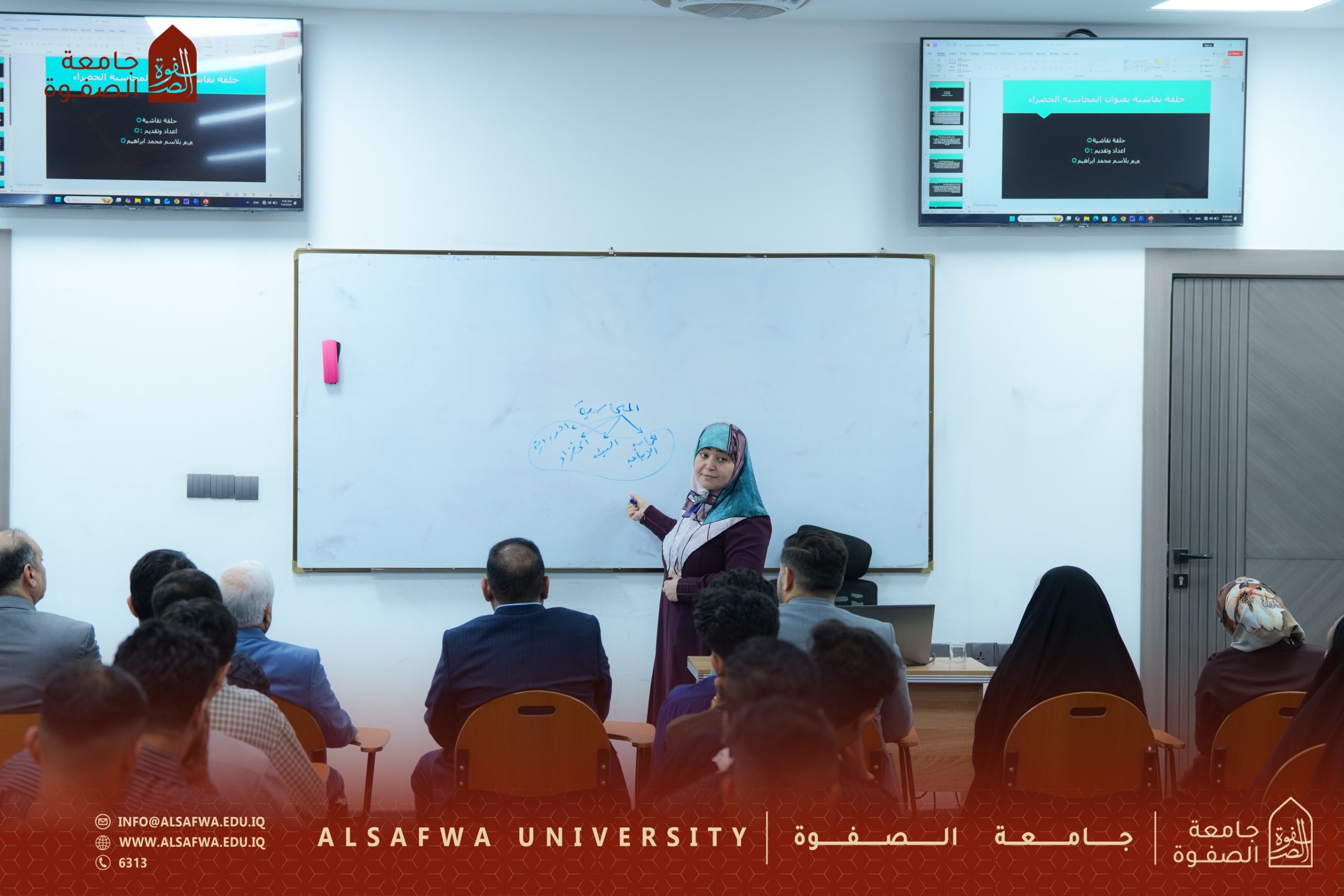
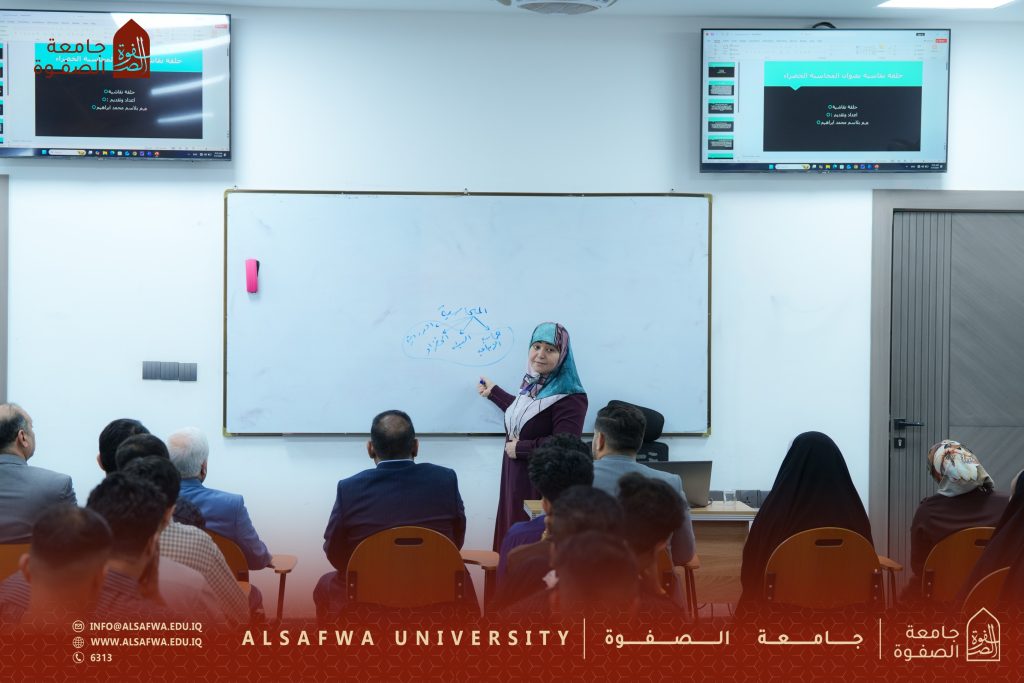
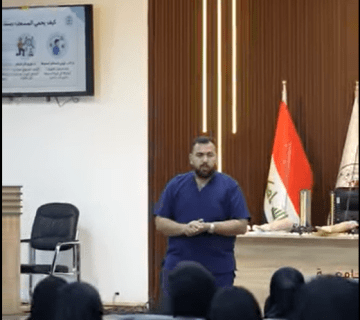
In line with its academic responsibility toward developing the environment of emerging projects, and in harmony with global trends toward a sustainable economy, the Continuing Education Department at Al-Safwa University, in cooperation with the Department of Accounting at the College of Administration and Economics, organized a specialized panel discussion entitled “Green Accounting and Its Role in Improving the Environmental Performance of Companies.”
The session, prepared and presented by Assistant Lecturer Blasim Mohammed Ibrahim, witnessed active participation and remarkable interaction from academics and specialists.
Axes and Dimensions of Modern Accounting:
The discussion highlighted the key dimensions and philosophies of modern accounting approaches, including:
• Green (Environmental) Accounting: integrating environmental costs into financial results.
• Blue Accounting: dedicated to the water economy and the protection of marine resources.
• Brown Accounting: concerned with traditional industries and the treatment of their emissions.
• Pink Accounting: linked to social dimensions and humanitarian work within institutions.
Concept and Importance of Green Accounting:
The workshop featured an in-depth discussion on the concept of Green Accounting, considering it a strategic tool aimed at incorporating environmental costs and benefits into companies’ financial statements. This contributes to measuring the real impact of production activities on the environment, managing resource depletion, and reducing the risks of industrial pollution.
Key Outcomes and Recommendations of the Panel Discussion:
The discussion concluded with several important points, most notably:
- Revealing hidden costs: transforming environmental damages, such as pollution fines and resource depletion, into clear material data that support managerial decision-making.
- Distinction from traditional accounting: Green accounting goes beyond silent numbers and balance sheets by considering the sustainability triad of society, environment, and economy.
- Enhancing transparency: supporting financial reports with accurate information that demonstrates institutions’ environmental responsibility before regulatory authorities and investors.
At the conclusion of the discussion, participants recommended that institutions, especially industrial ones, adopt the two pillars of green accounting—environmental measurement and disclosure—to achieve the desired balance between economic development and compliance with international environmental standards.









No comment